
DEEP PLANE FACELIFT · Gangnam, Seoul
Dr. Ryu’s
DEEP PLANE FACELIFT
in Seoul
4–5 hours under IV sedation · no hospitalization · 7–10 days of recovery in Korea · English-speaking consultants
The procedure
What is a DEEP PLANE FACELIFT?
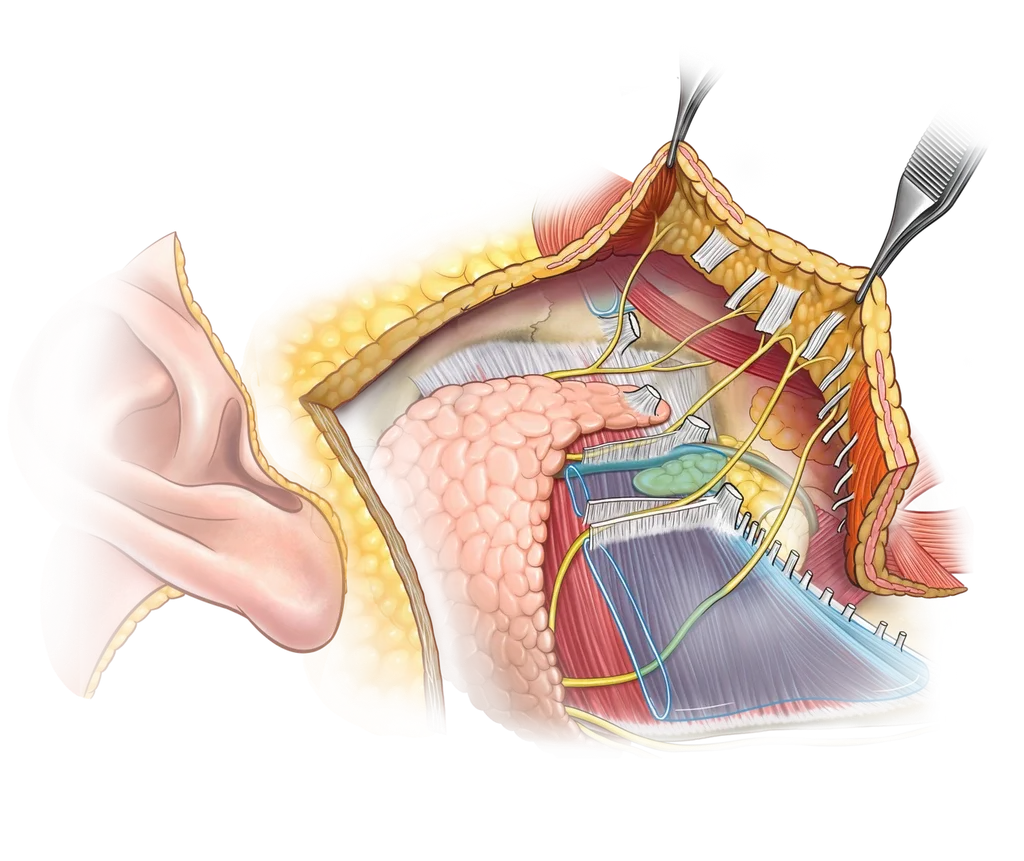
Both a SMAS lift and a DEEP PLANE FACELIFT work on the SMAS layer. What separates them is how far the retaining ligaments are released.
SMAS Lift
Where the lift stops.
The key difference is that, while both procedures address the SMAS layer, the SMAS lift provides a more limited lift as the zygomatic and masseteric retaining ligaments are not completely released, leaving some anterior facial sagging uncorrected.
Dr. Ryu’s DEEP PLANE FACELIFT
Five core concepts.
- Releasing the Retaining LigamentsThe deeper tissues move freely once the fixation points are released.
- High SMASControl of the midface and the lower face in one continuous transition.
- Composite / Preservation ConceptTissue is repositioned rather than unnecessarily removed.
- Extended Deep PlaneA broader release of the structures that restrict movement.
- Repositioning of the Buccal FatExisting volume is moved into hollow areas instead of taken away.
Key concepts
Key Concepts & Unique Characteristics of Dr. Ryu’s DEEP PLANE FACELIFT
01
Releasing the Retaining Ligaments
Releasing key facial retaining ligaments, including the zygomatic ligaments, allows the deeper facial tissues to move freely and be repositioned.
By releasing these anatomical points of fixation, the facelift is not dependent on simply pulling the skin, allowing the underlying tissues to be restored in a more natural position.
02
High SMAS
Dr. Ryu incorporates a High SMAS approach to achieve more comprehensive control of the midface and lower face. By working at a higher level of the SMAS layer, the technique allows elevation and repositioning of tissues that contribute to midface descent, cheek flattening, and lower-face laxity.
This helps create a more continuous transition between the cheek, nasolabial region, jawline, and neck, rather than treating each area as an isolated component. The goal is to restore the deeper facial architecture while maintaining natural facial movement and expression.
03
Composite / Preservation Concept
Focuses on preserving and repositioning the patient’s existing facial tissues rather than unnecessarily removing them. Skin, SMAS, fat compartments, and deeper soft tissues are treated as interconnected structures, allowing volume and contour to be restored while maintaining the natural relationships between the layers.
Preservation also applies to the skin itself. By minimizing unnecessary undermining and excessive manipulation of the skin, the technique aims to reduce skin trauma and preserve its blood supply. Less disruption to the skin can contribute to less tissue stress, more efficient healing, and a smoother recovery, while allowing the deeper tissues to provide the primary support for the rejuvenated appearance.
04
Extended Deep Plane
Expands the deep-plane approach beyond a limited central dissection to allow more extensive release and mobilization of the facial soft tissues.
For Dr. Ryu, the importance of the extended approach is not simply making the dissection larger, but releasing the specific anatomical structures that restrict movement, allowing the deeper tissues to be repositioned more comprehensively. This can provide more effective correction of midface descent, lower-face laxity, and jowling while maintaining a natural transition across the face.
05
Repositioning of the Buccal Fat
Rather than routinely removing buccal fat, Dr. Ryu may mobilize and reposition the buccal fat into areas of volume deficiency, particularly hollow or flattened areas of the midface.
This preserves the patient’s natural facial volume while using existing tissue to restore youthful contour and support. The goal is to avoid unnecessary fat removal and the overly hollow appearance that can result from excessive volume loss.
Not sure whether a facelift,
a neck lift, or both is right for you?
The facelift targets the sagging in the cheeks, while the neck lift targets the sagging of the jowls and jawline. You can freely choose to do one without the other, and whether both are needed together for facial harmony is decided at your consultation. Our English-speaking consultants will walk you through the options before you travel.
Procedure details
Operation and anaesthesia
Surgery Duration4–5 hours
AnesthesiaIV sedation
Hospitalization RequiredNo
DrainYes
Compression GarmentAbout 3 days
Stitch Removal7th day
Recovery timeline
What happens on each day after surgery
Day 1
Shampoo, Dressing, Antibiotic shot
Day 2
Dressing
Day 3
Shampoo, Short drain removal, dressing
Day 4
Dressing
Day 5
Shampoo, Medium/Long Drain removal, Dressing, Hemostatic Net, 70-80% Stitch out on front ear and neck
Day 6
Dressing
Day 7
Full stitch out on earlobes and fat graft
Recovery differs from person to person. Swelling usually peaks on the 3rd day post-op and slowly goes away, while bruising can take up to 3 to 4 weeks. The complete final result can be expected around 6 months post-operation.
Post-operative recovery care
Care provided during your stay
During your recovery period of 7-10 days, post-operative treatments and check ups will be provided for you daily. This includes Hyperbaric Oxygen Therapy (HBOT), Healite LED therapy treatments, and personal evaluations by Dr. Ryu.
Hyperbaric Oxygen TherapyPromotes faster recovery, reduces swelling and bruising, and has anti-aging benefits.
Healite Regenerative TreatmentUses LED light to help the skin heal faster, reduce inflammation, and rejuvenate itself.
Shampoo service, curated meals, lobby amenities, terrace usage. Visa invitation letter provided upon request.
What the quoted fee covers
Included and not included
Included
- Anesthesiology fees
- Postoperative care, including HBOT and Healite treatments
- Complimentary hair washing service (typically up to three sessions)
- Airport-to-hotel transportation service (arrival and departure) upon deposit confirmation
Not included
- Hotel accommodation costs
- Preoperative medical examination and laboratory testing fees
- Postoperative prescription medication costs
- Personal transportation expenses during your stay in Korea
The final amount is confirmed after examination and consultation. There are no official promotions or discounts offered at the moment.
Common questions
Before you travel (FAQ)
What is the difference between SMAS and DEEP PLANE FACELIFT?
The key difference is that, while both procedures address the SMAS layer, the SMAS lift provides a more limited lift as the zygomatic and masseteric retaining ligaments are not completely released, leaving some anterior facial sagging uncorrected. You can find more about this on Dr. Ryu’s official YouTube channel.
How long do you have to stay in Korea (recovery period)?
It’s generally recommended to stay in Korea only for about 7 to 10 days for recovery.
Who is Dr. Ryu?
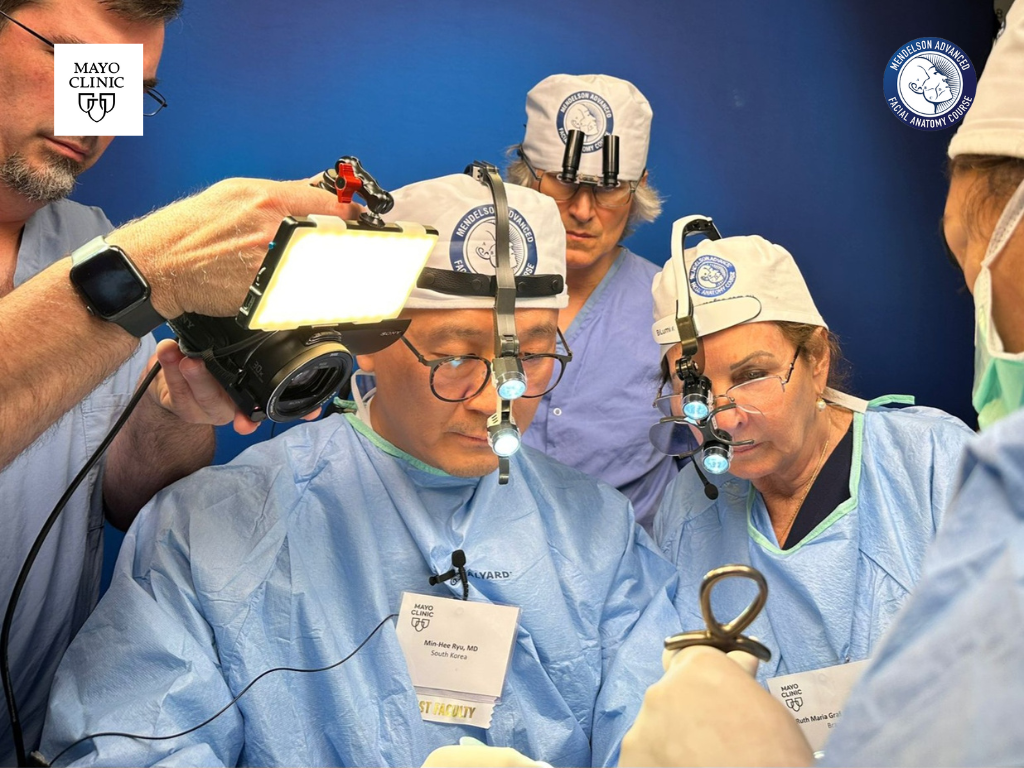
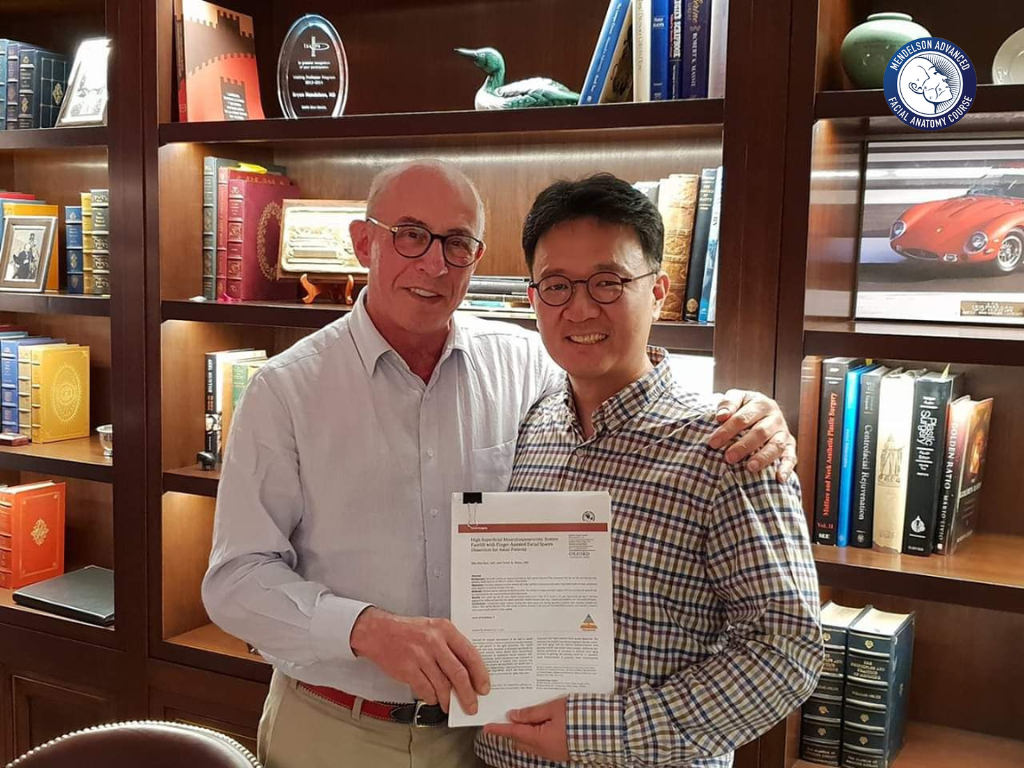
Dr. Min-Hee Ryu is a FACELIFT specialist and educator dedicated to advancing the field of facial rejuvenation surgery. As an invited lecturer, tutor, and live surgery demonstrator, he has shared his expertise in DEEP PLANE FACELIFT and facial anatomy across more than 15 countries. His academic appointments include Faculty Member at MAFAC since 2016, Guest Faculty Member at Mayo Clinic since 2023, and Editorial Board Member of the Aesthetic Plastic Surgery Journal (SCI) since 2019. He is also an active member of KSPRS, ASPS, ASAPS, and ISAPS.
What is Dr. Ryu’s DEEP PLANE FACELIFT?
Dr. Ryu’s DEEP PLANE FACELIFT is built around the release of the retaining ligaments, the High SMAS technique, the composite and preservation concept, the extended deep plane approach, and the repositioning of the buccal fat.
Why is there not a lot of before and after pictures?
RNWOOD values patient privacy and consent. Therefore, only photos of patients who have consented are available to the public. More photos can be shown during an in-person consultation.
Why is it so expensive? What is included in the cost?
The quoted base price includes the surgeon’s fee, the operating facility fee, anaesthesia and anesthesiology fees, medications provided during surgery, compression garments and dressings, daily post-operative treatments and follow-ups for the recommended 7 to 10 day recovery period, interpretation, postoperative care including HBOT and Healite treatments, up to three complimentary hair washing sessions, and airport-to-hotel transportation on arrival and departure once your deposit has been confirmed. Not included are the pre-operative medical examination and laboratory testing, post-operative oral antibiotics by prescription, hotel accommodation, and personal transportation during your stay in Korea. The Korean government has mandated a 10% tax on cosmetic procedures since July 2011. Previous HIFU, thread-lift or filler treatment may add a 10% to 30% surcharge, and secondary lifting cases may add a 30% to 50% surcharge. Your final treatment plan and total are confirmed in writing after consultation.
Can I do the Facelift without a Necklift?
The reason the Facelift and Necklift are separate procedures is that they target different areas. The Facelift targets the sagging in the cheeks, while the Necklift targets the sagging of the jowls and jawline. You can freely choose to do one without the other, and whether both are needed together for facial harmony is decided at your consultation.
Does Dr. Ryu perform revision cases? What is the revision rate?
Please note that the revision policy generally applies within the first 6–12 months after surgery, as concerns beyond this period are often related to the natural aging process and may be considered a secondary procedure. While some sagging may gradually recur over time, your results will not return to their preoperative state, and maintenance treatments are available to help preserve your outcome.
How long will it take until I look presentable? When will I look “normal”?
How fast someone recovers is different per person. Swelling usually peaks on the 3rd day post-op, and slowly goes away, while bruising can take up to 3 to 4 weeks. You can expect the complete final result to be 6 months post-operation.
Do I need to be hospitalized? How will I be taken care of after surgery?
There is no need for hospitalization, and you will be taken care of for a few hours in a recovery room until you’re ready to go back to your hotel. During your recovery in Korea, you can receive daily evaluations by Dr. Ryu, and use our HBOT and Healite services too.
Are there any discounts or promotions?
There are no official promotions or discounts offered at the moment. However, you can discuss further with your assigned consultant during your in-person consultation. Please feel free to inquire us for further details.
Can I do the surgery while travelling alone?
Please rest assured that many of our international patients travel to Seoul on their own for facelift surgery. Our dedicated English-speaking consultants and experienced medical team will be with you every step of the way, from your initial consultation through your recovery. In addition, hospitalization is typically not required.
How long does the surgery take, and what anaesthesia is used?
The surgery takes 4 to 5 hours and is performed under IV sedation. The anaesthesia and sedation are administered by Dr. Ryu, and the team monitors blood pressure, heart rate and oxygen saturation during surgery. One nurse and one consultant supervise recovery and discharge. Hospitalization is not required, a drain is used, the compression garment is worn for about 3 days, and the stitches are removed on the 7th day. Recovery differs from person to person, and the clinical team can change these instructions when a patient’s condition requires it.
What happens on each day of my recovery in Korea?
Day 1 — shampoo, dressing, antibiotic shot. Day 2 — dressing. Day 3 — shampoo, short drain removal, dressing. Day 4 — dressing. Day 5 — shampoo, medium and long drain removal, dressing, hemostatic net, 70-80% stitch out on front ear and neck. Day 6 — dressing. Day 7 — full stitch out on earlobes and fat graft.
What languages do your consultants speak?
Our consultants speak English, Korean, Chinese, Indonesian, Japanese and Tagalog. Dedicated English-speaking consultants are with you from your initial consultation through your recovery.